
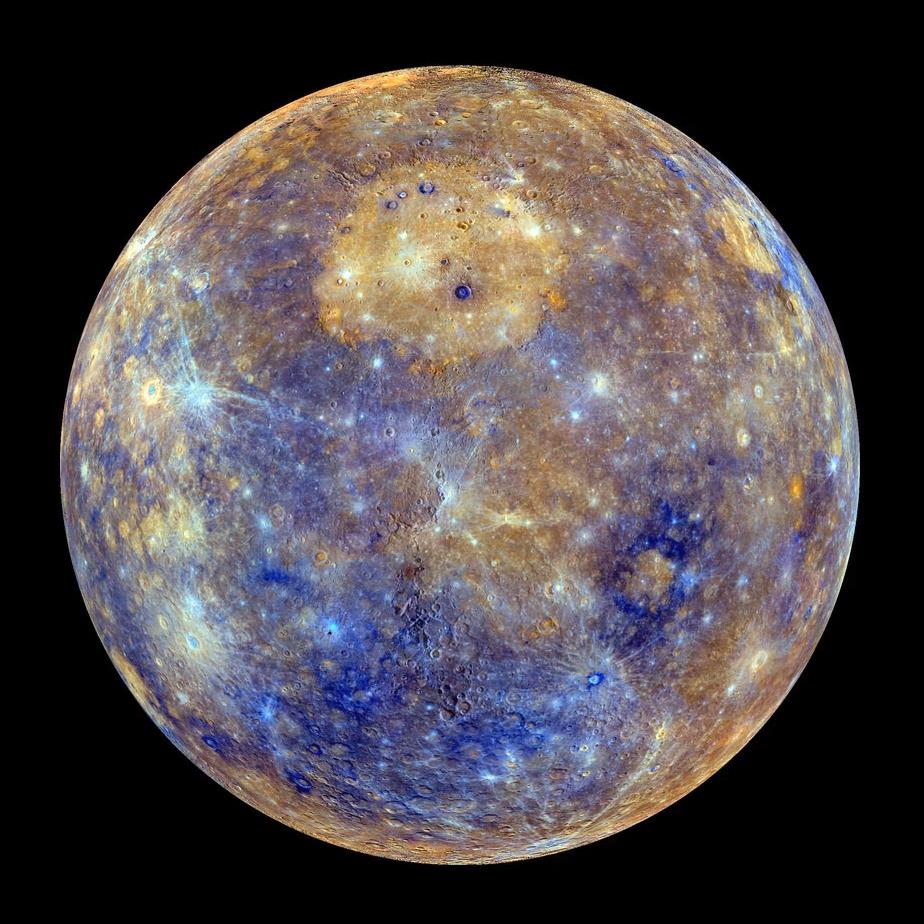

Mercury News Headlines
BepiColombo Successful Flyby of Jan 8th
1/8/2025

Read More
Best Images Yet from BepiColombo
9/5/2024
 The ESA/JAXA
spacecraft BepiColombo made a successful flyby at Mercury on Sept. 4th,
sending back its best images yet as it flew within 165km of the planet.
The successful maneuver will slow the spacecraft down to enable it to
eventually orbit Mercury starting in November 2026. The B&W images
were taken using the “M-CAM”, the main science camera is shield and will
provide higher resolution images once BepiColumbo starts its scientific
investigation in earnest.
The ESA/JAXA
spacecraft BepiColombo made a successful flyby at Mercury on Sept. 4th,
sending back its best images yet as it flew within 165km of the planet.
The successful maneuver will slow the spacecraft down to enable it to
eventually orbit Mercury starting in November 2026. The B&W images
were taken using the “M-CAM”, the main science camera is shield and will
provide higher resolution images once BepiColumbo starts its scientific
investigation in earnest.
Read More
Event Calendar
Apr 19, 2025
Mercury at highest altitude in morning sky
Apr 21, 2025
Mercury at greatest elongation west
Apr 24, 2025
Mercury at dichotomy
Observation Spotlight

Equipment: SCT 250mm f/10
A nice shot of Mercury taken using deep red filter at the end of 2024. Even though the aperture is only 250mm (10"), Mercury Section coordinator Frank Melillo has clearly captured surface details on the tiny planet.